

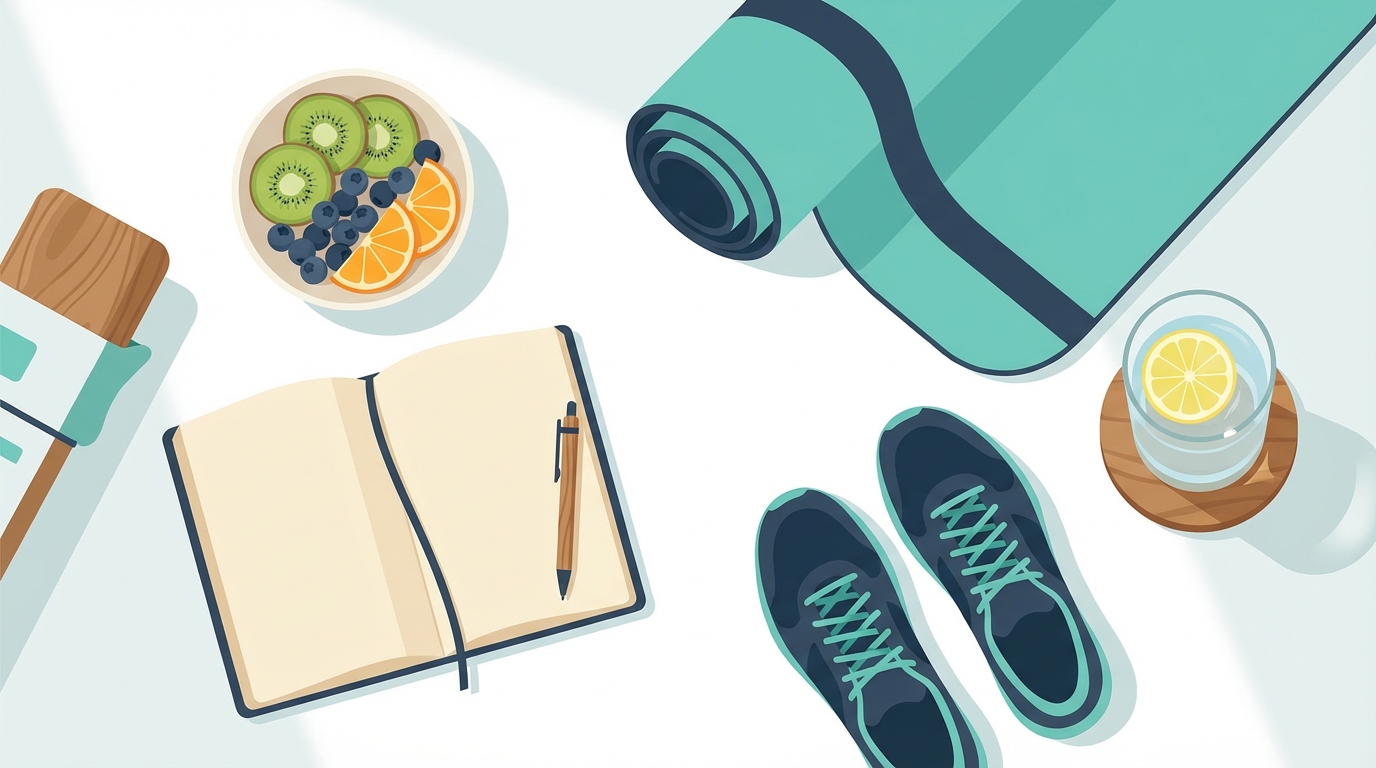
Recovery is not just about removing a substance from your life — it's about filling the space it leaves behind. The most successful long-term recoveries share one thing in common: the person didn't just stop doing something harmful. They started doing something meaningful.
These five habits are backed by neuroscience and behavioral psychology. Each one targets the same reward pathways that substances hijack — but through natural, sustainable means.
1. Morning Movement (Not "Exercise")
Forget the gym-bro motivation. We are talking about moving your body within the first hour of waking up. This can be a walk, yoga, stretching, dancing in your kitchen, or a bike ride. The specific activity matters far less than the timing and consistency.
Why it works: Morning movement triggers a cascade of neurochemicals — dopamine, serotonin, norepinephrine, and endorphins — that set the tone for the entire day. A 2023 study from the University of British Columbia found that just 20 minutes of moderate morning exercise reduced cravings for alcohol by 32% throughout the day.
The Minimum Effective Dose
You don't need an hour. Research shows that 15–20 minutes of movement at a pace where you can still hold a conversation is enough to shift your neurochemistry. The goal is consistency, not intensity.
How to start: Set out your shoes the night before. When you wake up, put them on before you check your phone. Walk for 10 minutes in any direction, then walk back. That's it. Build from there.
2. Cold Exposure (The 2-Minute Reset)
Cold showers, cold plunges, or even just ending your regular shower with 60–90 seconds of cold water. It sounds uncomfortable because it is — and that's precisely the point.
Why it works: Cold exposure triggers a sustained dopamine increase of up to 250% above baseline, lasting for several hours. Unlike substances that spike dopamine and then crash, cold exposure creates a gradual, sustained elevation. Research published in the European Journal of Applied Physiology showed that cold water immersion at 14°C increased dopamine by 250% and norepinephrine by 530%.
How to start: At the end of your regular warm shower, turn the handle to cold for 30 seconds. Work up to 2 minutes over the course of two weeks. It never stops being uncomfortable — but you get better at managing discomfort, which is itself a recovery skill.
3. Structured Journaling (5 Minutes, Not 50)
Journaling is not about writing novels. It's about creating a structured pause in your day to reflect, process, and plan. In the context of recovery, journaling serves as both a tracking tool and an emotional regulation strategy.
Why it works: Writing activates the prefrontal cortex — the same brain region suppressed during impulsive substance use. A study in the journal Advances in Psychiatric Treatment found that expressive writing reduced the frequency of intrusive, craving-related thoughts by 26% over a four-week period. This is also a core component of effective trigger tracking.
A simple framework:
- What happened today? (2 sentences)
- What did I feel? (1 sentence)
- Did I have cravings? What triggered them? (1–2 sentences)
- What am I grateful for? (1 item)
This pairs perfectly with substance tracking in an app like Remedy — your journal entries add context to your data.
4. A Real Wind-Down Ritual (Not Screens)
For many people, substance use is anchored to the evening. The after-work drink, the nightcap, the smoke before bed. Removing these without replacing the ritual leaves a void that practically begs to be filled.
Why it works: Rituals provide structure and signal safety to the nervous system. When your body expects "something" at 7 PM and gets nothing, cortisol rises. When it gets a predictable, calming routine, it relaxes.
Build a wind-down stack:
- 6:30 PM — Phone goes on Do Not Disturb
- 7:00 PM — Herbal tea (chamomile, valerian, or lemon balm)
- 7:15 PM — 10-minute stretching or guided breathing (YouTube or an app)
- 7:30 PM — Read, draw, puzzle, or do something analog
- 8:30 PM — Log your day in Remedy, note any cravings and what you did instead
The specifics matter less than the sequence. Your brain likes predictability. Give it a new script.
5. Connection That Isn't Digital
Loneliness is one of the strongest predictors of relapse. But connection doesn't mean you need to be at a party. It means authentic, face-to-face interaction — even brief ones.
Why it works: In-person social interaction releases oxytocin and serotonin in ways that texting and social media scrolling cannot replicate. A landmark study by Julianne Holt-Lunstad at Brigham Young University found that strong social connections reduce the risk of early death by 50% — that's a greater impact than quitting smoking.
Low-barrier options:
- Walk with a friend or neighbor (combines habit #1)
- Join a class — art, cooking, climbing, language
- Volunteer weekly at a local organization
- Have one device-free meal per day with someone you care about
- Attend a recovery meeting or community group
Build Your Daily Tracking Habit
Use Remedy to log your new habits alongside your substance tracking. See the correlation between healthy routines and reduced cravings.


Putting It All Together
You don't need to adopt all five habits on day one. That's a recipe for overwhelm. Instead:
- Week 1: Add morning movement (just 10 minutes)
- Week 2: Add the journaling framework (5 minutes)
- Week 3: Build your wind-down ritual
- Week 4: Try cold exposure
- Week 5: Schedule one real-world connection per week
Stack them gradually. Track your progress. Notice how cravings change as your daily life fills with purpose and structure. The goal isn't perfection — it's replacement. Every moment filled with a healthy habit is a moment that substance use can't occupy. If you want to understand the neuroscience behind why this stacking approach works, read the science of habit formation.