
"Dopamine detox" has become a buzzword — a viral concept that promises to fix everything from social media addiction to substance dependency by simply abstaining from pleasurable activities. Like most viral health concepts, it's built on a real scientific foundation but wrapped in oversimplification. Let's separate what actually works from what's just internet hype.
What Dopamine Actually Does (and Doesn't Do)
First, a crucial correction: dopamine is not the "pleasure chemical." This is the single biggest misconception in popular neuroscience. Dopamine is primarily about motivation and anticipation — it drives you toward rewards, not the enjoyment of them.
Dr. Anna Lembke, Stanford addiction psychiatrist and author of Dopamine Nation, explains it this way:
"Dopamine is not about the pleasure of consumption. It's about the wanting — the drive, the motivation, the craving. When dopamine is dysregulated, you want more but enjoy less."
This distinction matters because addiction isn't about chasing pleasure — it's about compulsive seeking. The substance stops feeling good long before the person stops using it. They use because they want it, not because they enjoy it.
How Substances Hijack the Dopamine System
Natural rewards — food, social connection, exercise — trigger modest dopamine releases (50–100% above baseline). Substances blow past these natural levels:
- Nicotine: 150–200% above baseline
- Alcohol: 150–200% above baseline
- Cocaine: 350% above baseline
- Methamphetamine: 1,000%+ above baseline
The brain responds to these supernormal levels by downregulating dopamine receptors — essentially turning down the volume on the entire reward system. The result:
- Natural pleasures (food, music, socializing) feel flat and unsatisfying
- More substance is needed to achieve the same effect (tolerance)
- Without the substance, baseline dopamine drops below normal (withdrawal/anhedonia)
- The brain is now wired to seek the substance as its primary dopamine source
This is the neurological trap of addiction, and it's the same mechanism that makes substance habits so much harder to break than regular habits.
What a "Dopamine Detox" Actually Is
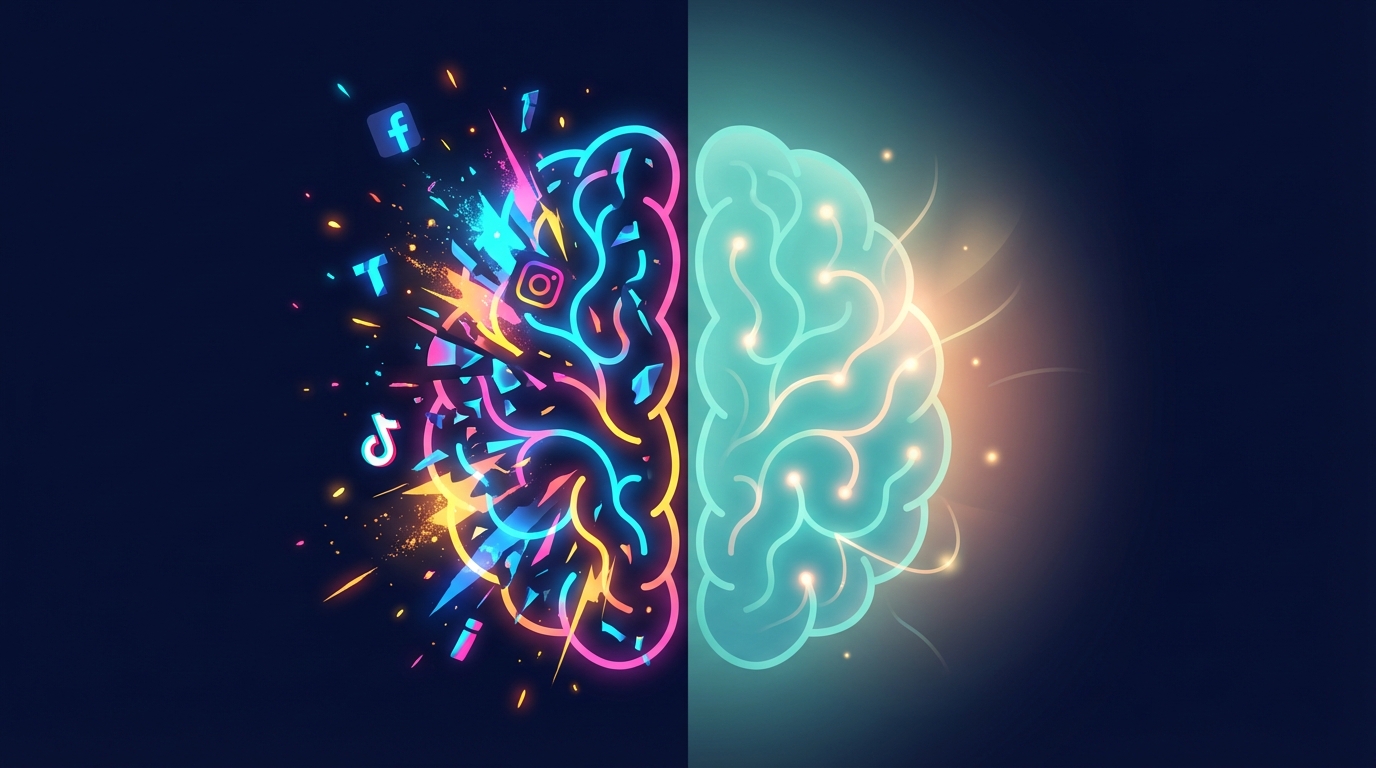
A true dopamine detox — more accurately called a dopamine reset — involves temporarily reducing high-dopamine stimuli to allow the brain's reward system to recalibrate. It is not about eliminating dopamine (impossible and fatal) or avoiding all pleasure (unnecessary and unsustainable).
The goal is to lower your baseline stimulation so that natural rewards become rewarding again.
The Pain-Pleasure Balance
Dr. Lembke describes the brain as having a pain-pleasure balance (like a seesaw). Flooding the pleasure side with substances tips the balance. The brain compensates by adding "pain weights" (downregulated receptors, withdrawal, anhedonia). A dopamine reset means stepping off the pleasure side long enough for the balance to return to center.
This process typically takes 2–4 weeks of significantly reduced stimulation, though full restoration can take months for heavy substance users.
The 30-Day Dopamine Reset Protocol
This is not the Silicon Valley "stare at a wall all day" version. This is a sustainable, evidence-informed protocol for people in recovery:
Phase 1: Eliminate (Days 1–7)
Remove or drastically reduce the highest-dopamine stimuli in your life:
- Substance of choice: Full abstinence (this is non-negotiable for the reset to work)
- Social media: Delete apps or use app timers (30 min/day max)
- Processed food: Reduce sugar and hyper-palatable snacks
- Pornography: Full abstinence
- Video games: Reduce to minimal or eliminate for the 30 days
Track every elimination and urge in Remedy — this data will become invaluable by day 30.
Phase 2: Replace (Days 8–21)
As your brain adjusts, deliberately introduce healthy dopamine sources:
- Exercise: 20–30 minutes of moderately intense movement daily
- Cold exposure: 1–2 minutes of cold shower (triggers sustained 250% dopamine increase)
- Sunlight: 10 minutes of morning light exposure (regulates dopamine and circadian rhythm)
- Social connection: In-person, device-free time with people you care about
- Creative work: Art, music, writing, cooking — anything with a tangible output
- Mindfulness: Daily meditation practice (even 10 minutes)
Phase 3: Recalibrate (Days 22–30+)
By the third week, most people begin noticing shifts:
- Food tastes better. Music sounds richer. Conversations feel more engaging.
- Cravings decrease in frequency and intensity
- Energy and motivation begin to stabilize
- Sleep quality improves significantly
Use this phase to selectively reintroduce some stimuli with intention. You don't need to live like a monk — you need to live with awareness. Your tracking data from the past 30 days will show you exactly which reintroductions are safe and which are trigger risks.
The Science Behind the Timeline
Why 30 days? The timeline is based on research showing that dopamine receptor density begins recovering within 2–4 weeks of abstinence from the offending stimulus. A landmark PET scan study in Neuropsychopharmacology showed that:
- Alcohol-dependent individuals had 20–30% fewer D2 dopamine receptors compared to controls
- After 2 weeks of abstinence, receptor density showed measurable recovery
- After 3–6 months, receptors returned to near-normal levels in most participants
This aligns with the broader habit formation research — real neurological change takes weeks, not days. The 30-day protocol is a minimum effective dose, not a finish line.
What Doesn't Work
The "complete deprivation" approach. Removing ALL pleasure for a day while changing nothing else is performative, not therapeutic. The brain doesn't reset in 24 hours.
Willpower-only strategies. Telling yourself "I just won't use my phone today" without replacing the behavior doesn't address the underlying dopamine deficit. The craving returns stronger.
Ignoring the substance. A dopamine detox focused on social media and sugar while continuing substance use is rearranging deck chairs on the Titanic. The substance is the primary driver of dopamine dysregulation — it has to be addressed first.
Who Should (and Shouldn't) Try This
Good candidates:
- People in early recovery who feel "flat" or anhedonic
- Anyone who feels overstimulated by modern life and uses substances to cope
- People who notice they can't enjoy simple pleasures anymore
- Sober-curious individuals who want to test how they feel without alcohol
Caution needed:
- People with severe substance dependence should not attempt abrupt cessation without medical supervision — withdrawal from alcohol and benzodiazepines can be life-threatening
- People with depression should consult a psychiatrist before reducing stimuli, as anhedonia may worsen temporarily
Track Your Dopamine Reset
Use Remedy to log your daily progress, cravings, mood, and which activities you replaced substances with. See how your brain responds over 30 days.


The Bottom Line
A dopamine detox isn't magic — it's applied neuroscience. By temporarily reducing supernormal stimuli and replacing them with natural dopamine sources, you give your brain's reward system a chance to heal. Combined with substance tracking and consistent healthy habits, it can accelerate the recovery process and restore your ability to find joy in everyday life.
The first week is hard. The second week is better. By the third week, you'll start to feel like a different person. Track it. Prove it to yourself with data.