

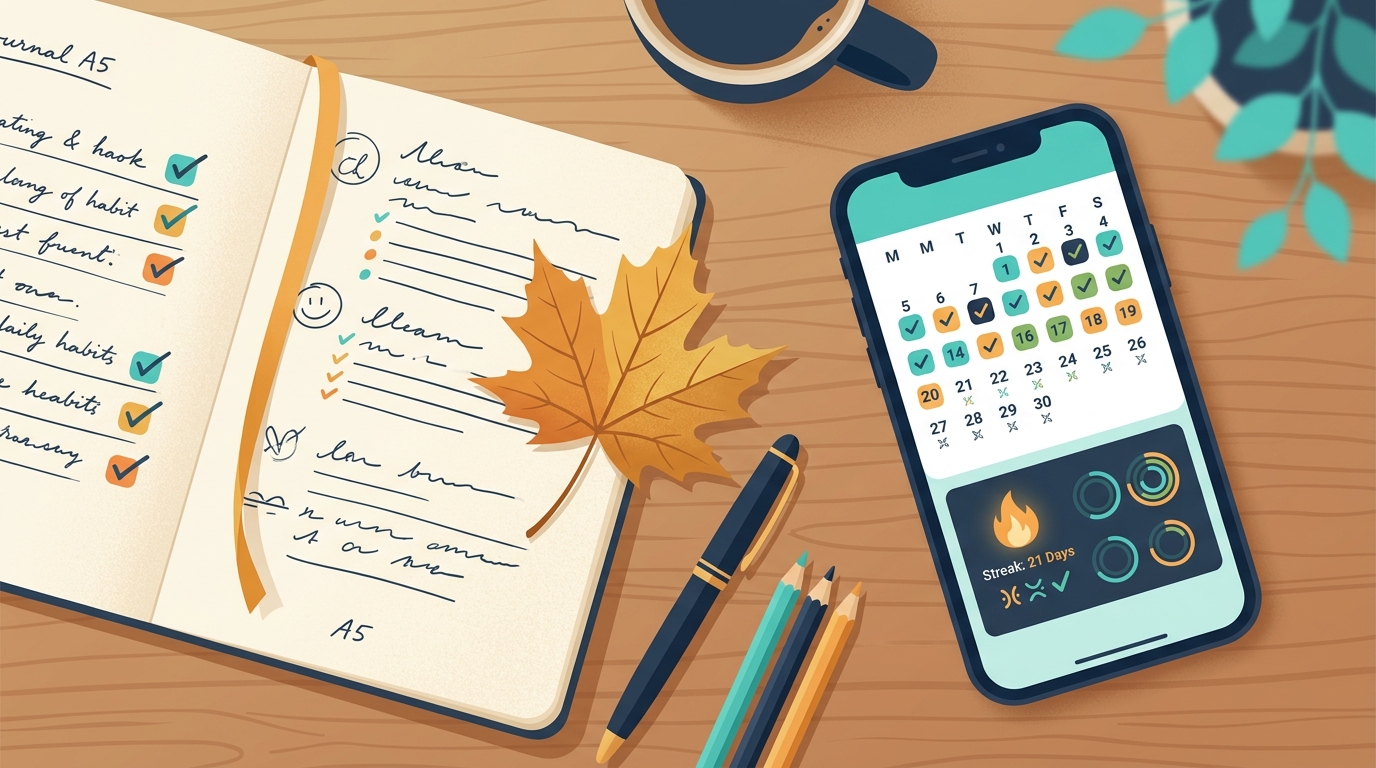
A streak can be motivating, but it is only one part of a Sober October. The deeper value comes from learning what changes when alcohol is absent and which situations still need a plan. A small amount of consistent tracking can make those answers easier to see.
You do not need a perfect spreadsheet. Pick a few signals that connect to your reason for doing the month, then record them in under two minutes a day.
Keep the goal realistic
If you drink heavily or regularly, ask a healthcare professional how to change your alcohol use safely before beginning an alcohol-free challenge. Tracking is not a substitute for medical support.
The five useful signals
- Alcohol-free status. Record whether the day matched your plan. If it did not, record what happened without erasing the rest of the month.
- Craving intensity. Use a simple 0-10 scale or words such as low, medium, and high. Consistency matters more than precision.
- Context. Note the time, place, people, and feeling around a craving. These details often reveal the cue.
- Next-day experience. Track sleep quality, energy, mood, or focus if those are part of your reason for participating.
- What helped. Write one action that made the day easier: a walk, a meal, a conversation, a different route home, or an early night.
A two-minute daily check-in
At the same time each evening or the next morning, answer five questions:
- Did I drink alcohol today?
- What was the strongest craving or trigger?
- How did I sleep or feel today?
- What helped?
- What is one thing I want to remember tomorrow?
Keep the answers short. A useful note might be: “Day 9. No alcohol. Strong urge at 6pm after a difficult meeting. Ate dinner, walked, urge passed. Slept 7/10.” That is enough to support a later pattern review.
Separate outcome from learning
When tracking is treated like a test, one difficult day can make the whole system feel pointless. Treat it as an observation log instead. A day that did not go as planned can still teach you about timing, access, emotions, or social pressure.
This is also why it helps to record alcohol-free days and the situations around them. You are building a picture of your life, not trying to produce a perfect score.
Review once a week
At the end of each week, look for three things:
- A repeated trigger, such as a transition after work or a particular social setting.
- A strategy that helped more than once.
- A change you noticed in sleep, mood, energy, spending, or time.
Turn each finding into a small adjustment for the next week. For example: “Friday evenings are difficult, so I will plan dinner and a movie before leaving work.” The cravings guide covers more ways to handle the moment when it arrives.
Use a tracker that you will actually open
Paper is fine. A notes app is fine. A dedicated tracker is useful when you want your history, streaks, dosage or substance details, and patterns in one private place. Choose the lightest tool that helps you return to the information.
Track the month, not just the streak
Remedy gives you a private place to log substance use, triggers, notes, and progress so you can make sense of the patterns behind each day.


What to do with the data on November 1
Do not rush to a conclusion. Compare your notes with the reason you started, then decide what deserves another experiment. You might continue alcohol-free, set a specific boundary, or bring the patterns to a healthcare professional or recovery support group. The point of tracking is to give your next decision better information.